A surface built by hand, one thin layer at a time. Its depth is felt in the way it catches light, traces a curve, and belongs to the room.
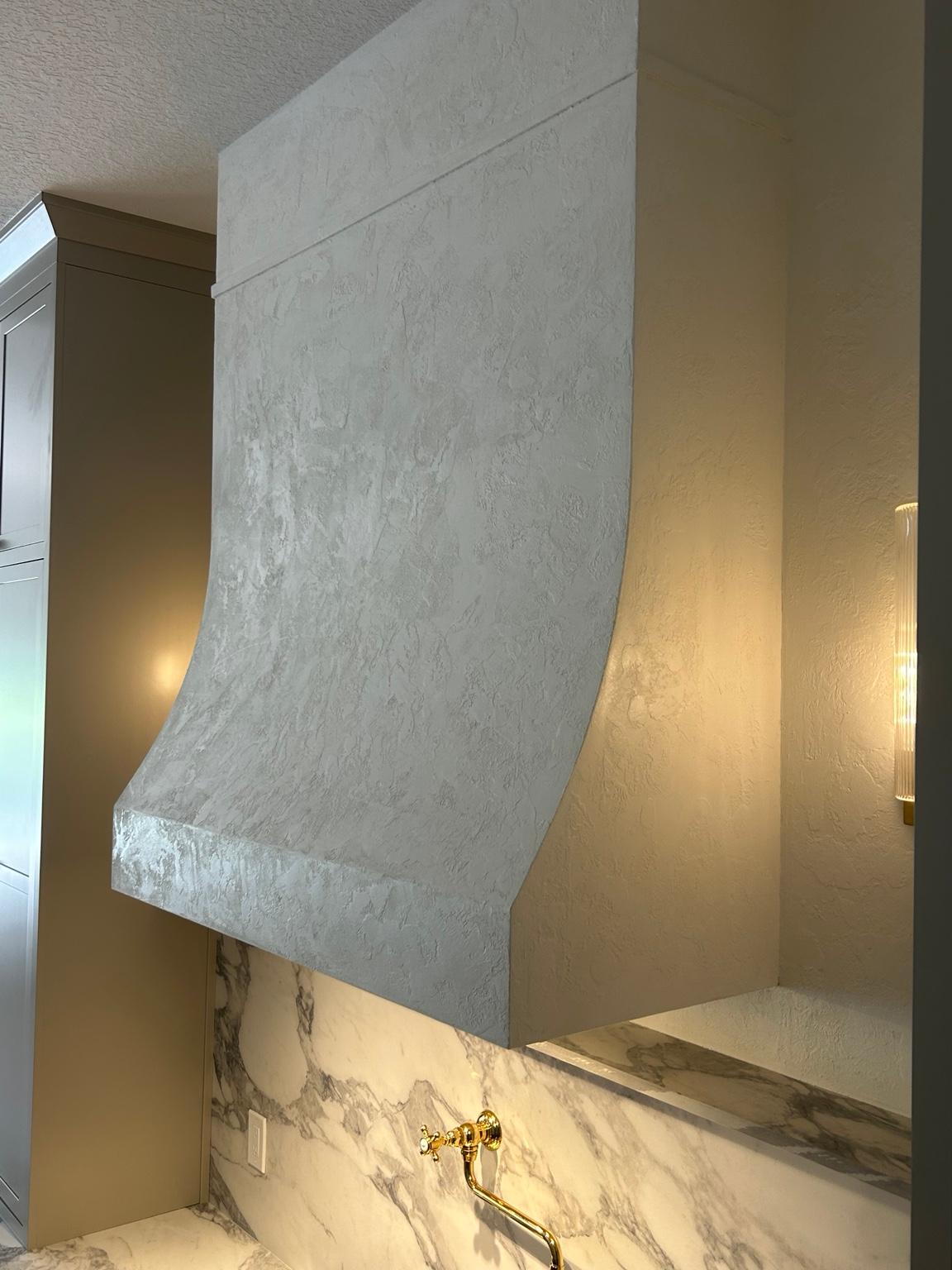
A sculptural kitchen hood lets the plaster become part of the architecture.
Venetian plaster is a hand-applied decorative finish that gives a wall depth beyond a coat of paint. Worked in thin layers with a trowel, it can hold subtle movement and respond differently to light throughout the day.
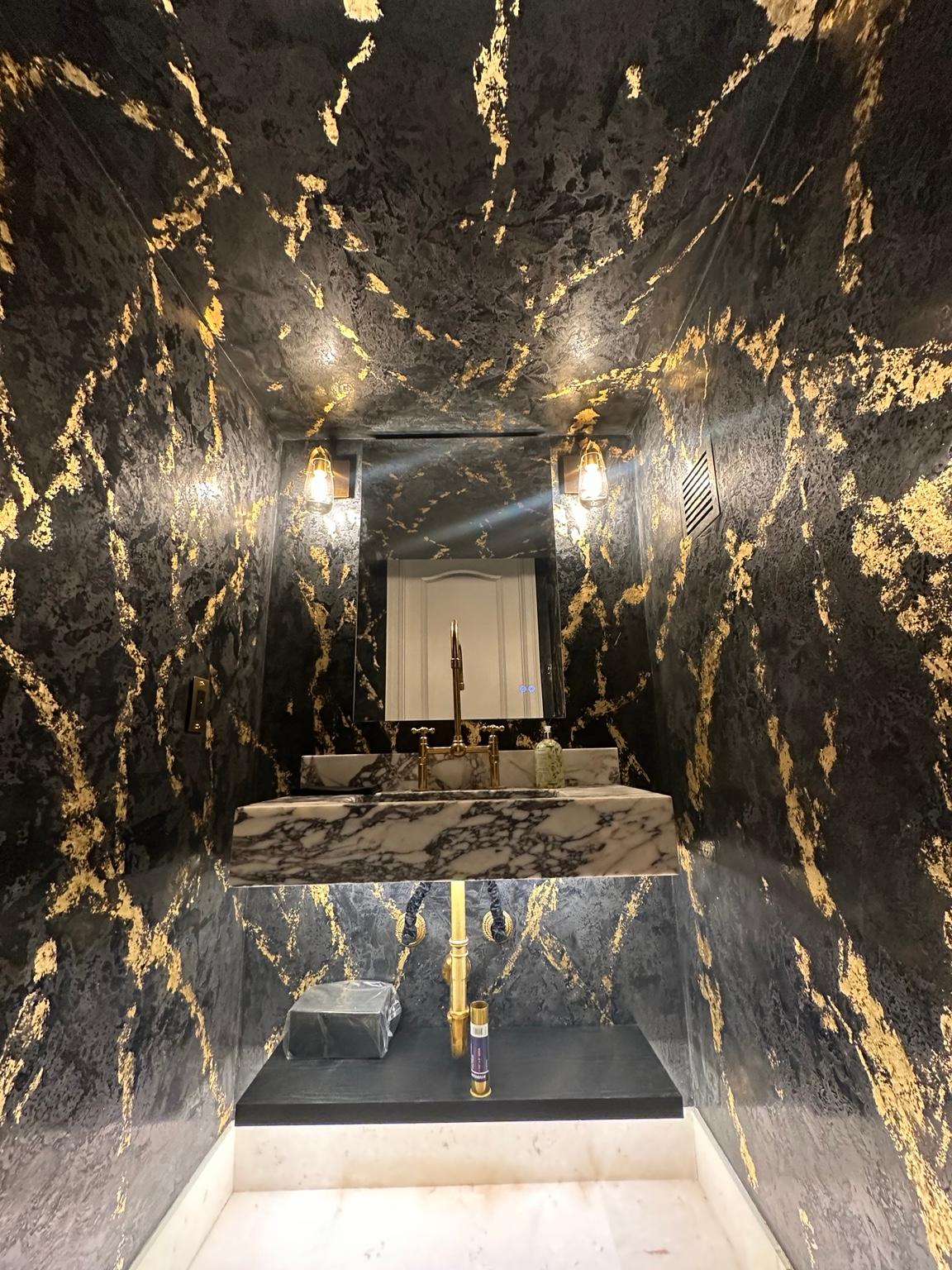
The name describes a family of finishes rather than one fixed look. Some surfaces are soft and matte; others are smoothed to a satin finish or polished to a reflective sheen. The material, the application, and the final treatment all shape the result.
Why choose it?
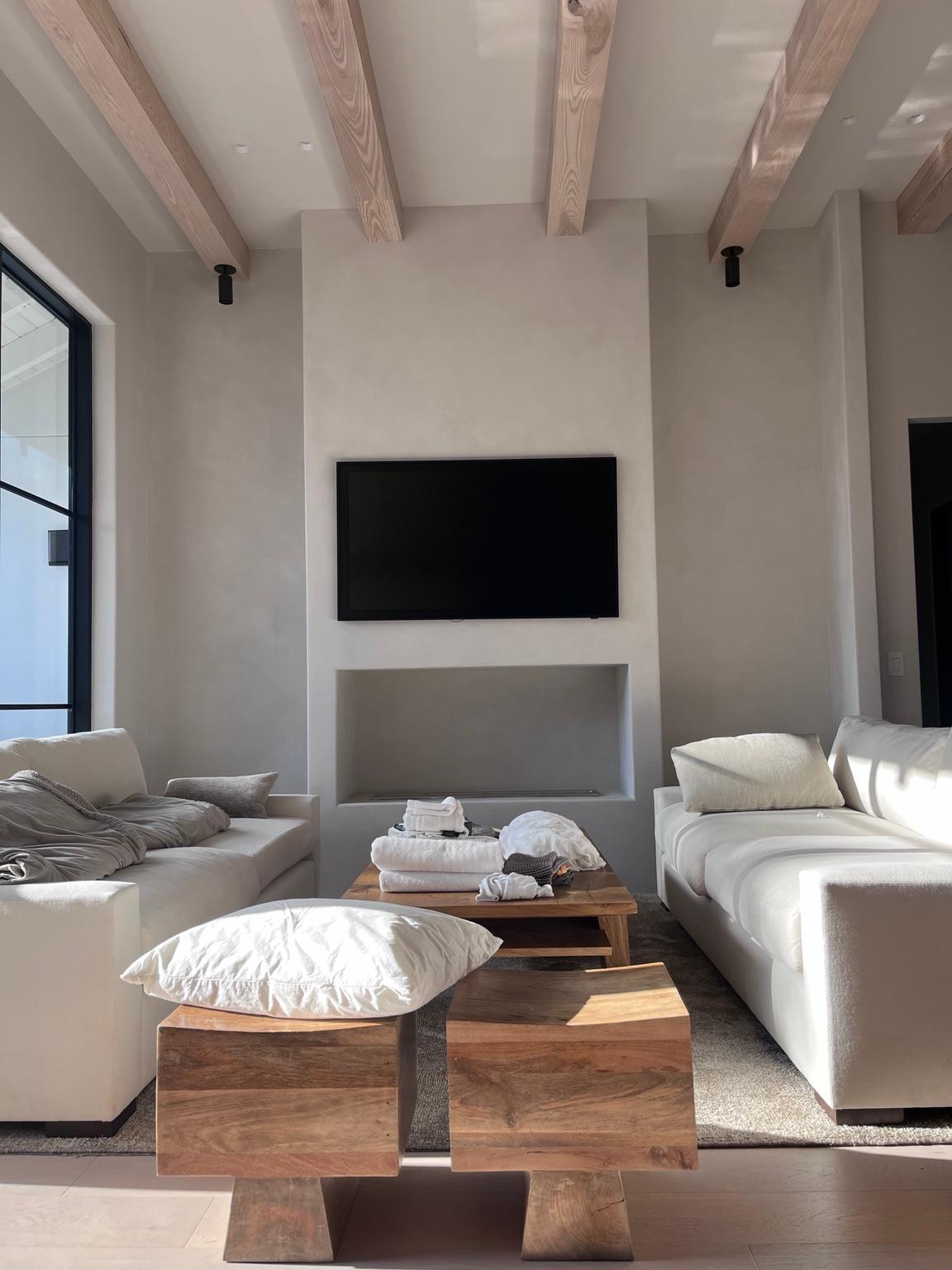
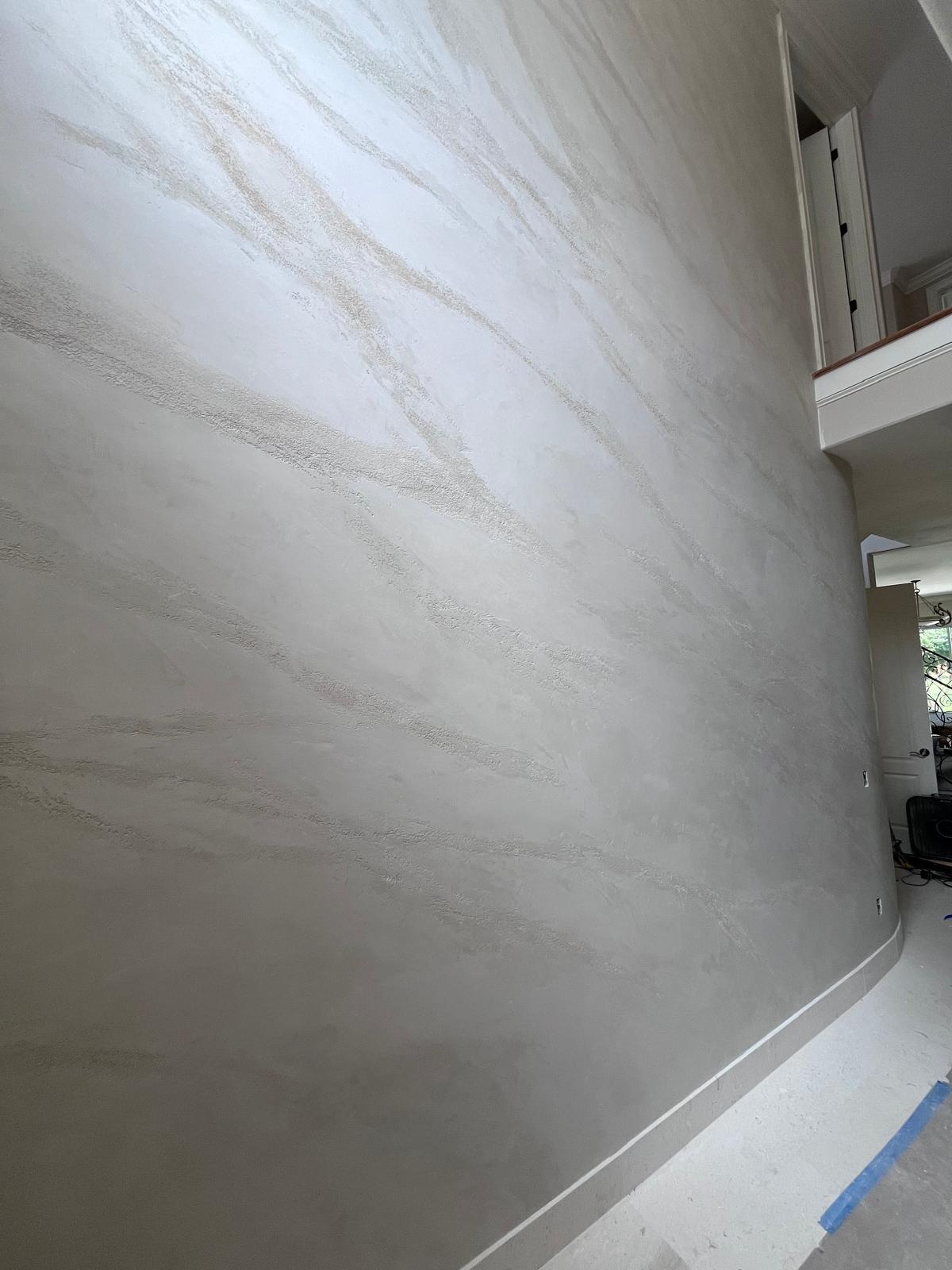
Plaster can make a surface feel integral to the architecture. It can follow a curve, bring quiet texture to a large room, or give a fireplace or kitchen hood a distinct presence. The right treatment depends on the surrounding light, proportions, stone, wood, and the way the space will be used.
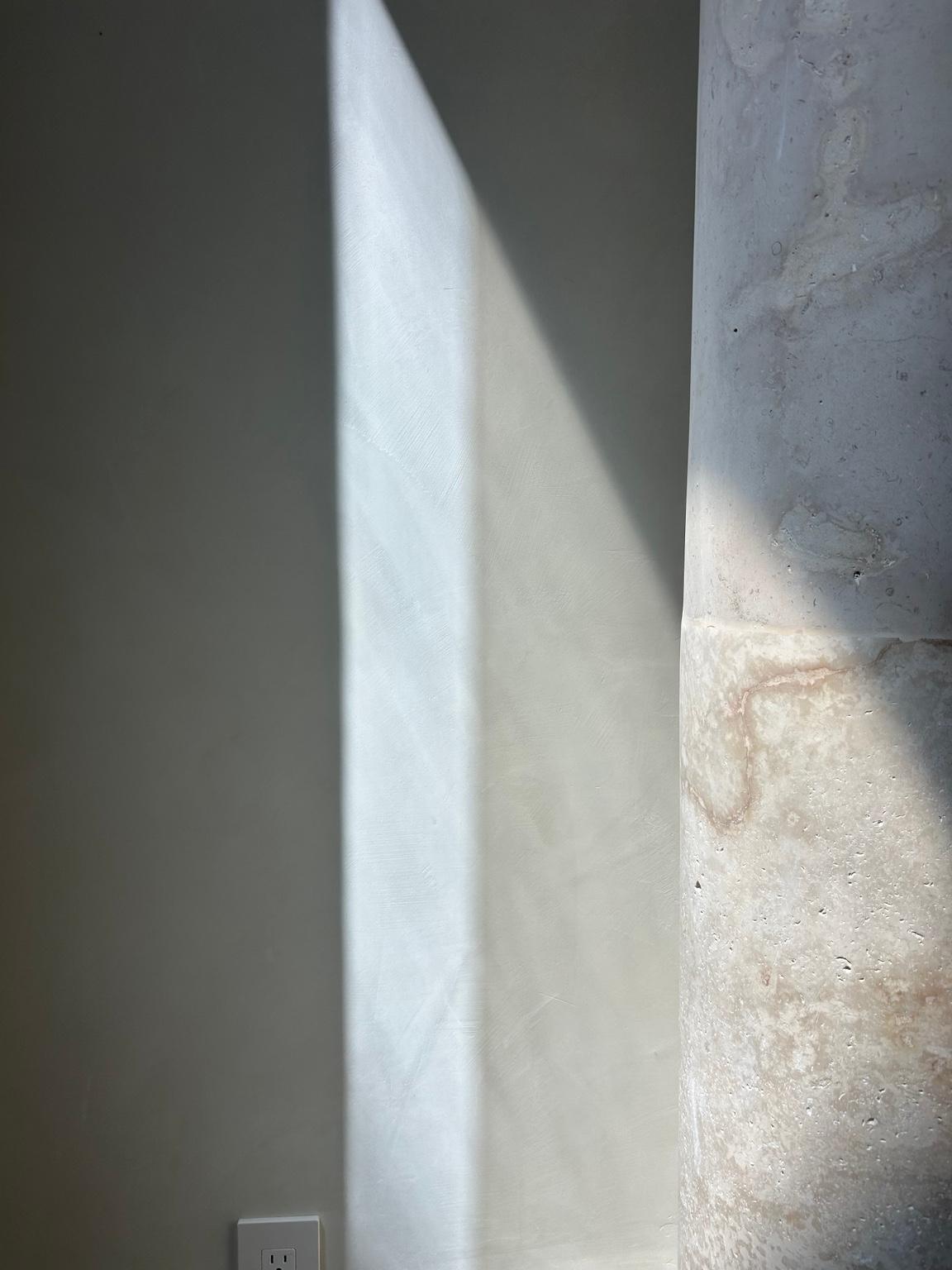
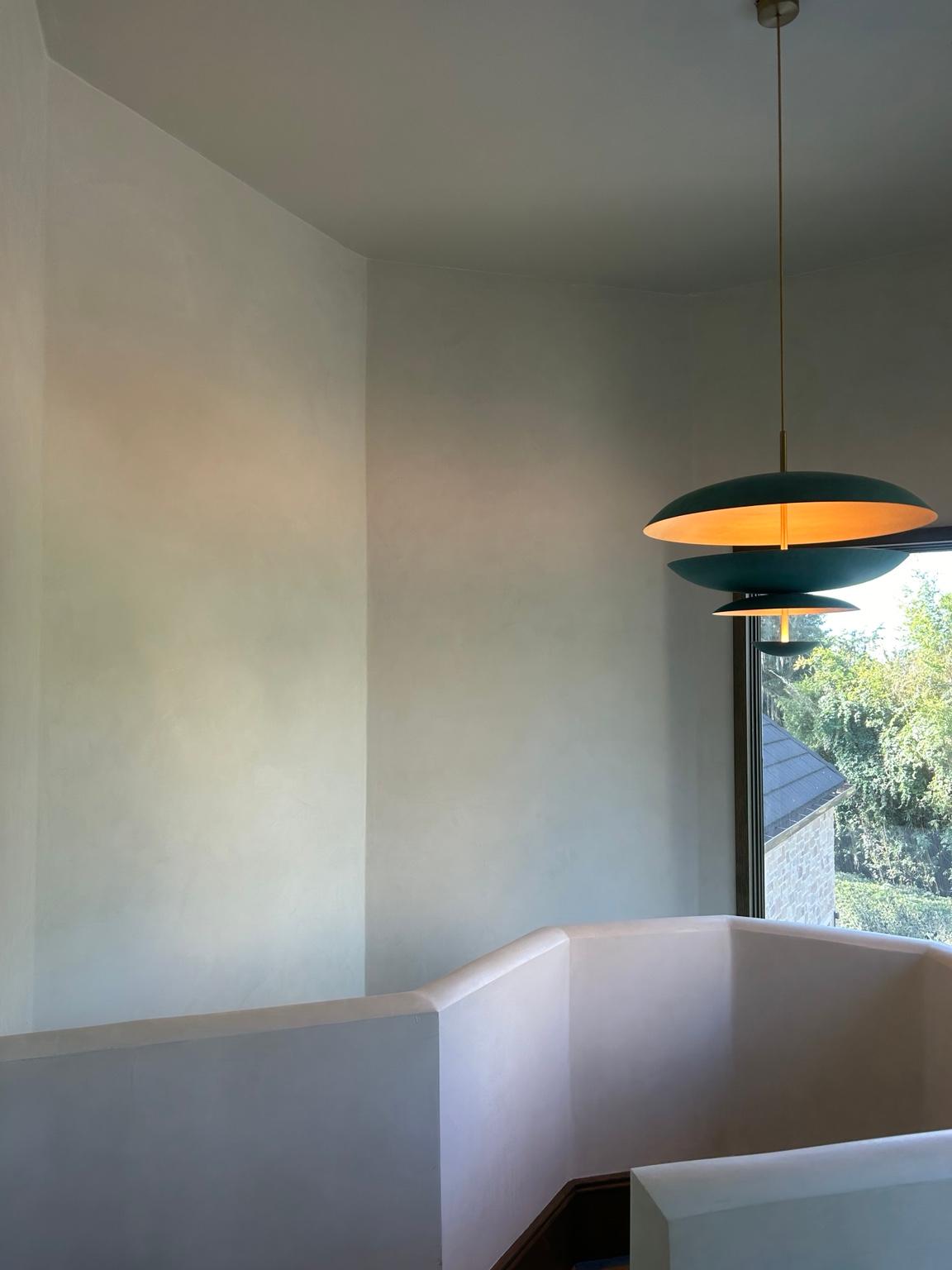
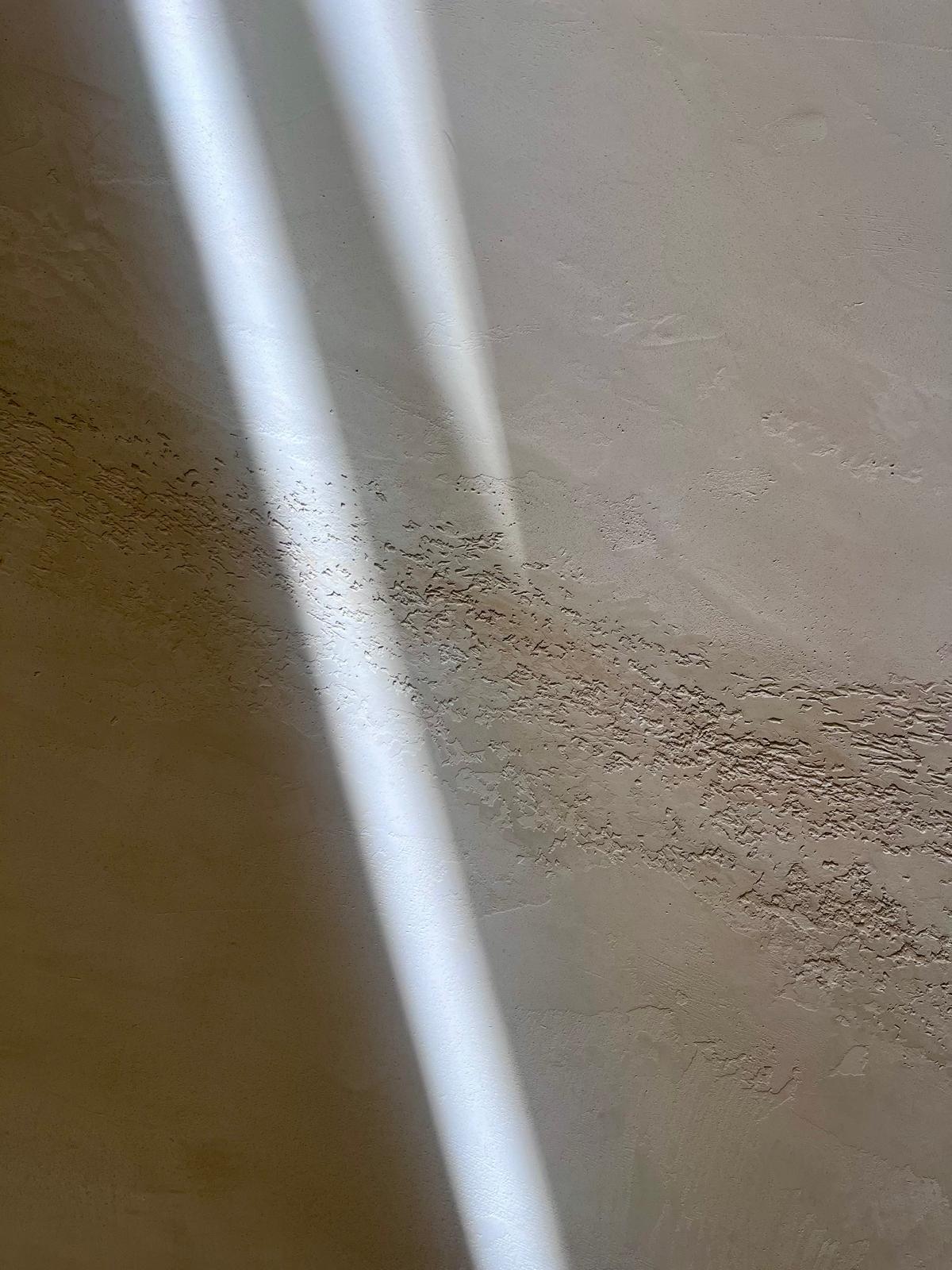
Light reveals the movement held within the finish.A continuous surface can quietly carry a room's geometry.The finish can settle into the larger material palette of a home.Up close, the hand of the artisan remains visible.
Is Venetian plaster always shiny?
No. A polished finish is one possibility, but a restrained matte or satin surface may suit a room better. The aim is to choose the finish that belongs in the space.
At Terra Alto Living, we begin with those surroundings. A physical sample helps establish color, movement, and sheen before work begins. Preparation matters just as much: the condition and flatness of the underlying surface affect what the finished plaster will reveal.