From a quiet wall to a sculptural form, the finish can move with the architecture. The right material system depends on what that surface will meet each day.
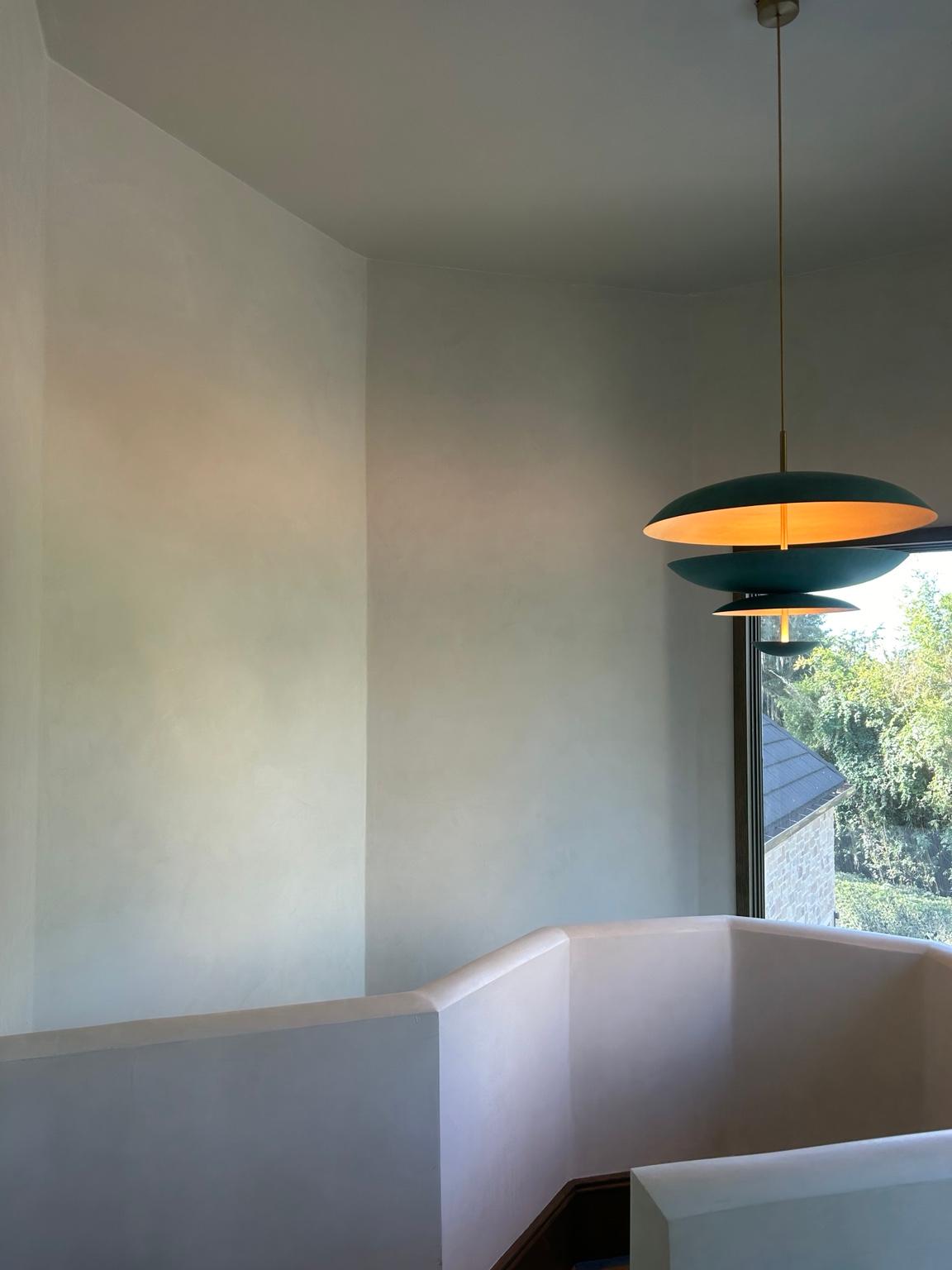
Plaster follows the lines of a room rather than stopping at a flat wall.
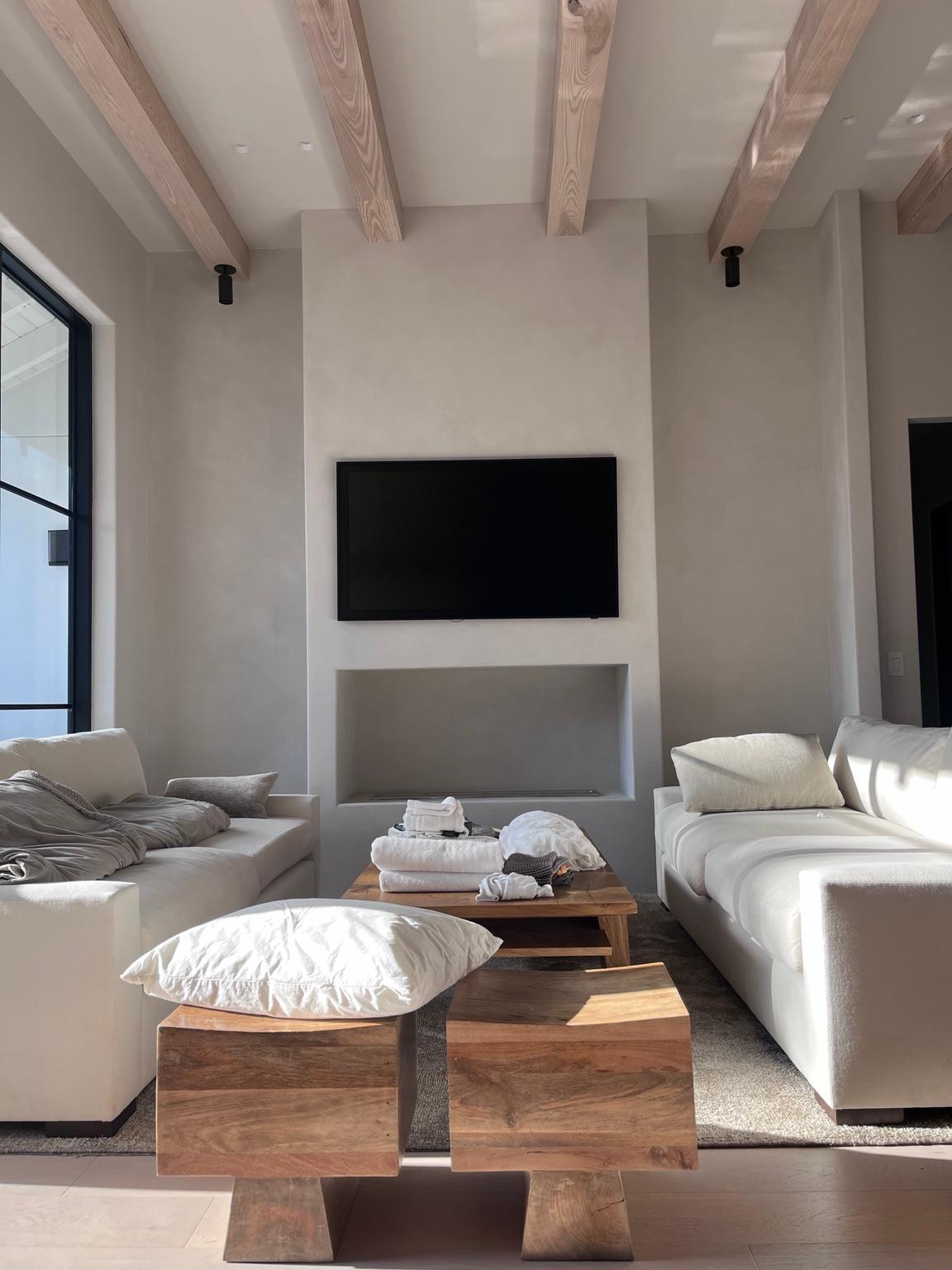
Venetian plaster is most at home on interior walls and ceilings. It can create a subtle, continuous backdrop in a living room or give one feature wall a stronger presence. The color, texture, and sheen are developed for the particular light and materials of the space.
Curves and architectural details
Arches, stairwells, niches, columns, and rounded walls are places where hand-applied plaster can feel especially natural. The finish can carry across a curve and make transitions feel intentional. These forms require careful preparation, edges, and access, so they are assessed individually.
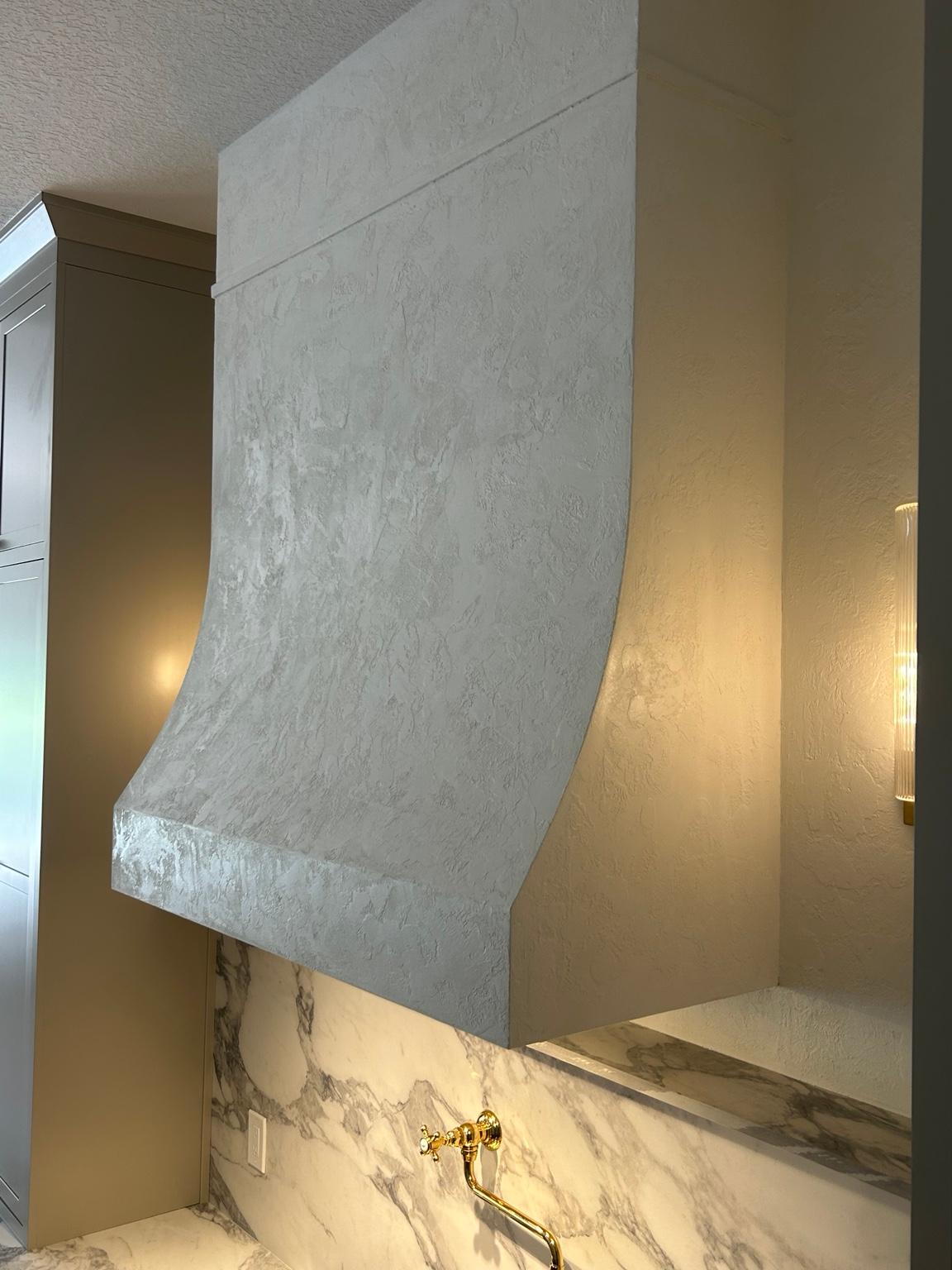
Fireplaces and kitchen hoods
A fireplace surround or sculptural kitchen hood can become a focal point without adding another material. The substrate and the chosen plaster must be suitable for the temperatures and conditions at the installation. A decorative finish is not placed in direct flame or treated as a cooking surface.
A hood gives the finish an architectural role.Across a larger room, the material holds a quieter presence.
What about bathrooms?
Powder rooms and bathroom walls outside direct water can be good candidates for an appropriately finished plaster. A shower is a different assembly. Direct water exposure calls for a specified wet-area system, proper waterproofing beneath the decorative surface, and a compatible protective finish. We assess that scope separately; microcement may be the better material for some wet areas.
Existing walls and exterior surfaces
An existing painted wall may be suitable after repairs, surface preparation, and compatible priming. Paint, texture, movement, and moisture conditions cannot be ignored beneath a refined finish. Outdoors, only a product and complete system rated for exterior use should be considered, with the substrate and Florida weather in mind.